
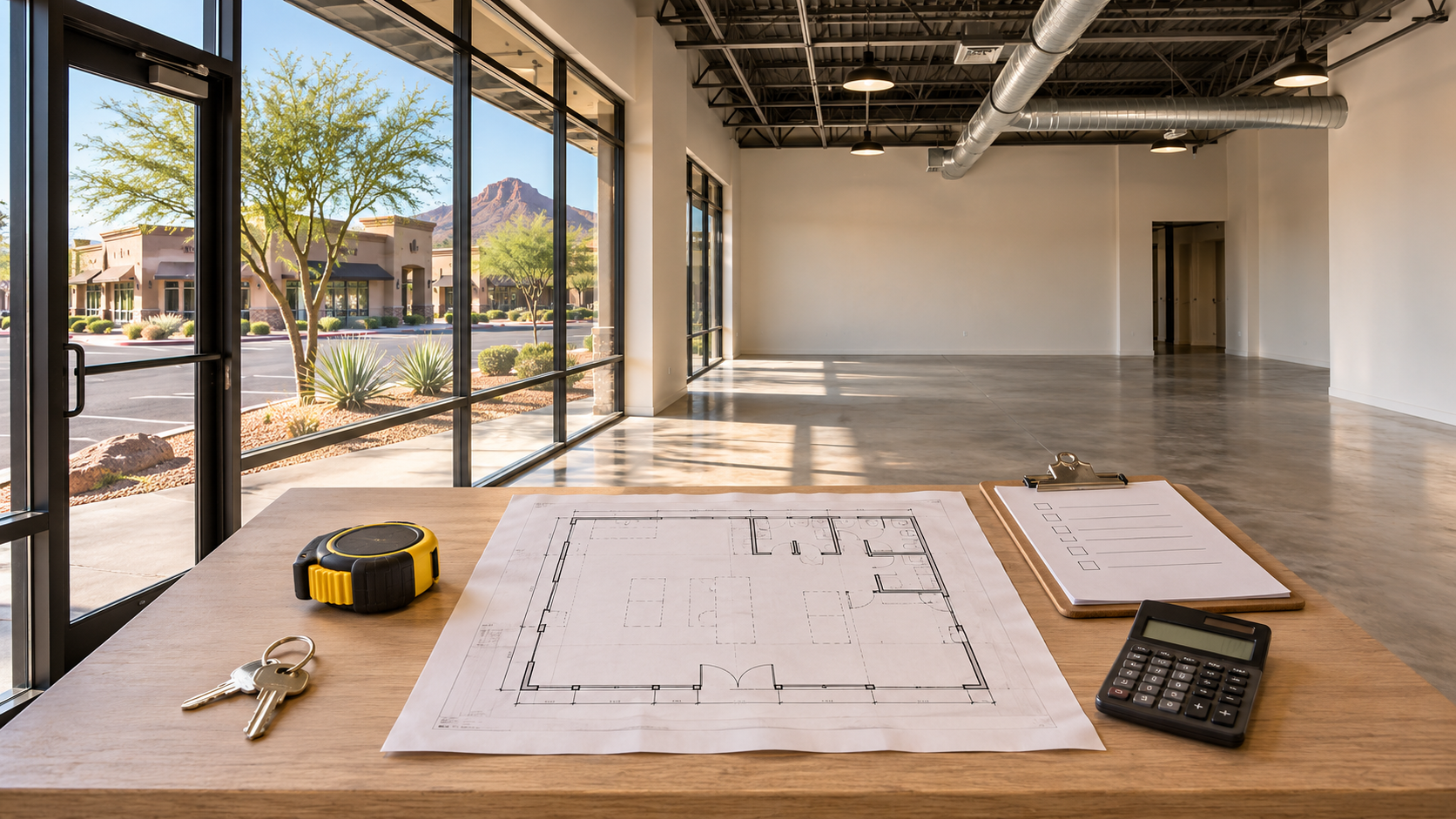
Before signing a commercial lease in Phoenix, check whether the space can support your business, what improvements it needs, and how the lease agreement divides costs and responsibilities. Monthly rent is only one part of the decision. Utilities, permits, maintenance expenses, construction timing, and lease terms can all affect your budget.

At KRB Development, we approach commercial tenant improvements by starting with how the space needs to function. The goal is to understand the work before committing to a property, especially when your equipment or layout differs from the previous tenant’s.
These ten checks connect construction planning with the questions business owners should raise during lease negotiations.
Key Takeaways
- Evaluate the building around your business operations and equipment.
- Confirm zoning, occupancy, and construction approval requirements.
- Calculate total occupancy costs beyond the advertised base rent.
- Clarify landlord work, tenant improvements, and maintenance responsibilities.
- Review personal guarantees, renewal options, and early termination provisions with an attorney.
1. Confirm the Property Allows Your Business Use
Start by describing what will happen inside the space. A general label such as “retail” may not fully explain food preparation, salon services, medical treatment, or other specialized activities.
Ask the city to confirm whether the proposed business type fits the property’s zoning laws and whether additional approvals are needed. Also check the permitted-use language in the commercial lease agreement. Landlord permission does not replace municipal approval.
For a retail tenant, signage rights, customer access, deliveries, and operating hours may be especially important. Confirm these details before assuming the location supports your plans.
2. Review Occupancy, Permits, and Existing Conditions
Request the existing Certificate of Occupancy, available approved plans, and records of previous alterations. Compare those documents with the current layout and your proposed use.
Phoenix’s commercial building guidance identifies tenant improvements and changes of use among projects requiring commercial permitting. Ask your design professionals which requirements apply to the specific property.
Our guide to permit requirements for Phoenix commercial remodels explains the process in more detail.
If the property has historic designation, investigate that early. Phoenix requires additional review for certain exterior changes to properties with historic preservation overlays. Signs, windows, entrances, and rooftop work may deserve careful review before design decisions are made.
3. Compare Electrical, HVAC, and Plumbing Capacity With Your Needs
Prepare an equipment list before assessing the building’s systems. Include major appliances, specialty equipment, lighting, computers, and anticipated additions.

Have qualified professionals review:
- Electrical service capacity, voltage, panels, and circuit needs.
- HVAC condition, cooling capacity, and ventilation.
- Water supply, drainage, and hot water capacity.
- Connections needed for specialized business equipment.
The applicable requirements come from the Phoenix Building Construction Code, including its mechanical, electrical, and plumbing provisions. Existing equipment should be assessed against your intended use.
Consider an illustrative example: converting a retail suite into a salon. The floor area might work, but wash stations could require new drains, concrete cuts, and additional hot water capacity. That work belongs in the feasibility review before it becomes an unexpected cost.
4. Check Accessibility and Fire-Safety Needs
Review entrances, circulation routes, restrooms, exits, and the proposed number and use of rooms with the design team. Fire-safety requirements depend on factors such as occupancy, layout, and the planned activities.
Changing walls or ceilings may affect sprinkler coverage, alarms, or exit arrangements. Accessibility work can also extend beyond the part of the space you initially planned to renovate.
The lease agreement should clearly allocate responsibility for accessibility work and costs. However, the Department of Justice’s ADA guidance explains that a landlord and tenant cannot eliminate their obligations to the public simply by assigning responsibility between themselves in a contract.
Identify the required work and its funding before finalizing the construction budget.
5. Calculate Total Occupancy Cost, Not Just Monthly Rent
Ask for a breakdown of everything payable under the proposed lease structure.
In addition to base rent, occupancy costs may include property taxes, building insurance, utilities, common area maintenance charges, repairs, and other operating expenses. Common area maintenance, often called CAM, can cover shared areas and services.
Lease labels provide a starting point:
- Gross lease: The landlord generally includes specified property expenses in the rent. Check exclusions and increases.
- Modified gross lease: The landlord and tenant divide expenses according to the agreement.
- Net lease: The tenant pays certain expenses separately from base rent.
- Triple net lease: The tenant generally pays allocated property taxes, building insurance, and maintenance or operating costs in addition to base rent.
A triple net arrangement does not automatically mean the tenant pays every possible expense. The actual wording controls.
Even fixed monthly rent may exclude variable charges. Request available expense histories, current estimates, reconciliation procedures, and any negotiated caps. This helps reveal hidden costs before they affect your business’s budget.
6. Put Landlord Work and Maintenance Responsibilities in Writing
Clarify what condition the landlord will deliver the commercial property in and which improvements remain your responsibility.
Separate initial repairs from ongoing maintenance. For example, who handles a malfunctioning HVAC unit before possession, and who pays if it needs replacement later?
Review responsibility for:
- HVAC servicing, repairs, and replacement.
- Roof leaks, structural work, and exterior repairs.
- Plumbing and electrical systems.
- Interior maintenance.
- Shared areas and building services.
- Restoration or removal of improvements when the lease ends.
Avoid relying on broad statements such as “the landlord covers maintenance.” Identify the systems, exceptions, approval requirements, and cost limits.
Clear documentation gives the contractor a more reliable scope and helps reduce misunderstandings that can become costly disputes.
7. Match the Improvement Allowance to the Build-Out Budget
A tenant improvement allowance contributes toward eligible work. It does not establish the total cost of the project.
Compare the proposed allowance with a scope-based budget covering design, permits, construction, equipment, and contingency funds. Confirm which costs qualify and who pays any shortfall.
Also review when funds become available. If reimbursement follows completed work, the tenant may need to fund payments first. Documentation requirements and deadlines deserve the same attention as the allowance amount.
Our guide to negotiating a tenant improvement allowance covers those funding questions in greater detail.
8. Align Construction Timing With Rent Commencement
Possession, construction access, rent commencement, and opening day may be different dates.

Ask when each obligation begins and what happens if landlord work, approvals, or material deliveries take longer than expected. Construction delays can create financial exposure when rent starts before business operations generate revenue.
Build a preliminary schedule around:
- Design and landlord review.
- Permit applications and approvals.
- Equipment and material lead times.
- Construction and installation.
- Required inspections and occupancy approval.
Have your attorney review any negotiated construction period, rent abatement, or delay provisions. Do not assume an unfinished build-out automatically postpones rent.
9. Review the Lease Term, Renewal Options, and Exit Routes
Your lease term should be considered alongside the investment in the space and the business’s future.
A longer lease may provide time to use the improvements, but it also extends the commitment. Review rent increases, renewal options, notice deadlines, and how renewal rent will be determined. Market conditions may affect future rent if the agreement uses a market-rate formula.
Negotiate renewal provisions before signing, rather than assuming you can remain when the lease expires.
Also review assignment and subletting options if you sell, relocate, or change your business. These provisions may require landlord consent and may not release the original tenant or guarantor.
Some agreements allow early termination under specific conditions, potentially involving advance notice, fees, or repayment of incentives. Do not assume you can end a commercial lease early simply because business needs change.
Arizona law includes specific circumstances involving premises becoming untenantable, so a blanket statement that there is never a statutory right to leave would be inaccurate. A licensed Arizona attorney should assess the agreement and applicable law before you rely on early termination rights.
10. Understand Personal Guarantees and Obtain Legal Review
A personal guarantee can create personal liability for business lease obligations, even when a company is the named tenant.
Before signing, understand which obligations are guaranteed, how long the guarantee lasts, and what happens after renewal, assignment, or early termination. Depending on its terms and applicable law, a guarantee can expose personal assets.
Ask your attorney whether a monetary cap, time limit, or defined release condition can be negotiated. These protections must be agreed to; they are not automatic.
Many commercial lease terms deserve careful review. Unlike residential leases, commercial agreements should not be approached on the assumption that residential tenant protections apply. A standard-looking lease form still needs to be assessed against your circumstances.
A broker providing tenant representation can help with property selection and lease negotiations. A licensed Arizona attorney can explain legal jargon, evaluate legal exposure, and review unfavorable terms before the final agreement is signed.
Frequently Asked Questions
Should I involve a contractor before signing a commercial lease?
Yes, where possible. A contractor can help identify construction needs while you are still evaluating properties. Combine that assessment with input from your design professionals, broker, and attorney.
Does fixed monthly rent include all occupancy costs?
Not necessarily. The lease may add utilities, CAM charges, property taxes, insurance, or maintenance expenses. Review the full payment obligations and potential increases before comparing spaces.
Can HVAC repairs become the tenant’s responsibility?
Yes, depending on the commercial lease terms. Distinguish routine servicing from major repairs and replacement. Ask for the system’s condition and available maintenance records before accepting responsibility.
Can I end a commercial lease early?
Possibly, depending on negotiated early termination rights, an agreement with the landlord, or applicable legal grounds. Review notice, fees, and continuing obligations with an attorney. Leaving without a valid right or release can expose the tenant to claims for rent and damages.
Does a business lease protect me from personal liability?
Signing through a business does not cancel a separate personal guarantee. Have the guarantee reviewed to understand its scope, potential exposure, and any negotiated limits.
What happens to the build-out when the lease ends?
The agreement may address ownership of improvements, removal of equipment, and restoration of the space. Review those provisions before installing specialized features, since removal or restoration could add costs later.
Make the Lease Decision With the Build-Out in Mind
Before signing a commercial lease in Phoenix, understand what the space needs, what the agreement requires, and how both affect your budget.
Our recommendation is to bring construction planning into the conversation early. Pair a property assessment with a realistic budget and careful legal review. That due diligence helps Arizona business owners make an informed decision about the space and their long-term plans.
Final Thoughts
Before signing a commercial lease in Phoenix, take time to understand the space, the work it needs, and the costs beyond monthly rent. Clear responsibilities and a realistic build-out plan can help you avoid costly surprises.
If you’re evaluating a commercial space, contact KRB Development to discuss your plans and construction needs before making a commitment.